Chimney Cleaning Questions Answered: The Complete Homeowner's Guide
Costs, cleaning logs, DIY sweeping, inspections, creosote and odor — clear answers to the questions homeowners ask most about chimney cleaning.
If you own a home with a fireplace or chimney, regular chimney maintenance is an important part of keeping the system clean, functional, and ready to use. Homeowners often have questions about chimney cleaning costs, how often a chimney should be cleaned, whether chimney cleaning logs actually work, and whether it is safe to clean a chimney yourself.
In this complete guide, Chimney Prime answers many of the most common questions homeowners ask about chimney cleaning, chimney sweeping, inspections, DIY cleaning, cleaning products, and professional chimney maintenance.
What Is Chimney Cleaning?
Chimney cleaning, often called chimney sweeping, is the process of removing soot, creosote, ash, debris, and other buildup from a chimney and fireplace system.
When wood burns, smoke and combustion gases travel through the chimney. Over time, residue can accumulate on the interior walls of the flue.
One of the most important substances chimney professionals look for is creosote. Creosote is a combustible residue that can develop when wood burns. Heavy accumulation may restrict airflow and can increase the risk of chimney fires.
A professional chimney cleaning may involve cleaning and evaluating areas such as:
Chimney flue
Fireplace
Smoke chamber
Smoke shelf
Damper area
Accessible connector pipes
Wood stove flue systems
Chimney cap area
Firebox
The exact service depends on the type and condition of the chimney.
How Does Chimney Cleaning Work?
Professional chimney sweeping generally involves using specialized brushes, rods, vacuums, and other chimney-cleaning equipment to loosen and remove buildup from the chimney.
Depending on the chimney design, technicians may clean the system from the roof, from inside the home, or by using a combination of both methods.
The goal is to remove accumulated material while containing dust and debris as much as possible.
After cleaning, the technician may also visually check accessible chimney components for potential problems.
Are Chimneys Cleaned From Inside or Outside?
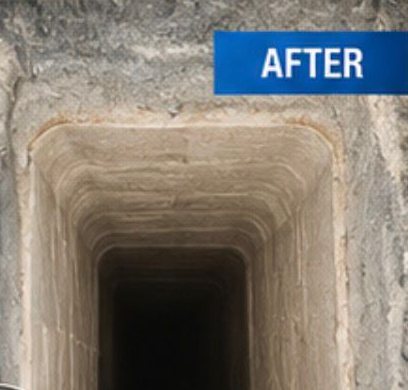
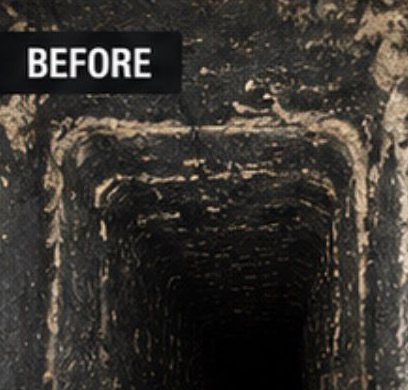
Creosote and soot buildup before cleaning
They can be cleaned either way.
Some chimney systems are cleaned primarily from the fireplace upward. Others are swept from the roof downward. Professional chimney sweeps may also use a combination of both methods.
The best method depends on factors including chimney height, roof accessibility, chimney construction, fireplace configuration, type of heating appliance, amount of buildup, and weather conditions.
A professional chimney company can determine the most appropriate approach after evaluating the system.
How Do You Know When a Chimney Needs to Be Cleaned?
Several signs can indicate that your chimney should be inspected or cleaned.
Visible soot or creosote
Dark buildup inside the fireplace or chimney can indicate that combustion residue has accumulated.
Strong fireplace or chimney odors
A smoky, burnt, or tar-like smell—particularly during warm or humid weather—may be associated with creosote or other material inside the chimney.
Smoke entering the room
If smoke does not draft properly and begins entering the living area, the chimney may have an airflow problem, obstruction, or buildup.
Falling debris
Pieces of soot, masonry material, or other debris appearing inside the fireplace should not be ignored.
Reduced fireplace performance
Changes in draft or burning performance can sometimes indicate an issue requiring inspection.
You do not know when it was last cleaned
If you recently purchased a home or cannot remember the last chimney service, scheduling an inspection is often a sensible starting point.
Should I Clean My Chimney Every Year?
Many homeowners schedule a chimney inspection annually, especially when they regularly use a fireplace or wood-burning appliance.
Whether cleaning is required every year depends on the condition of the chimney and how frequently it is used.
Factors that can affect cleaning frequency include frequency of fireplace use, type of fuel burned, wood moisture level, chimney design, draft performance, previous creosote accumulation, and condition of the flue.
An inspection can help determine whether cleaning is actually needed.
Why Is Chimney Cleaning Important?
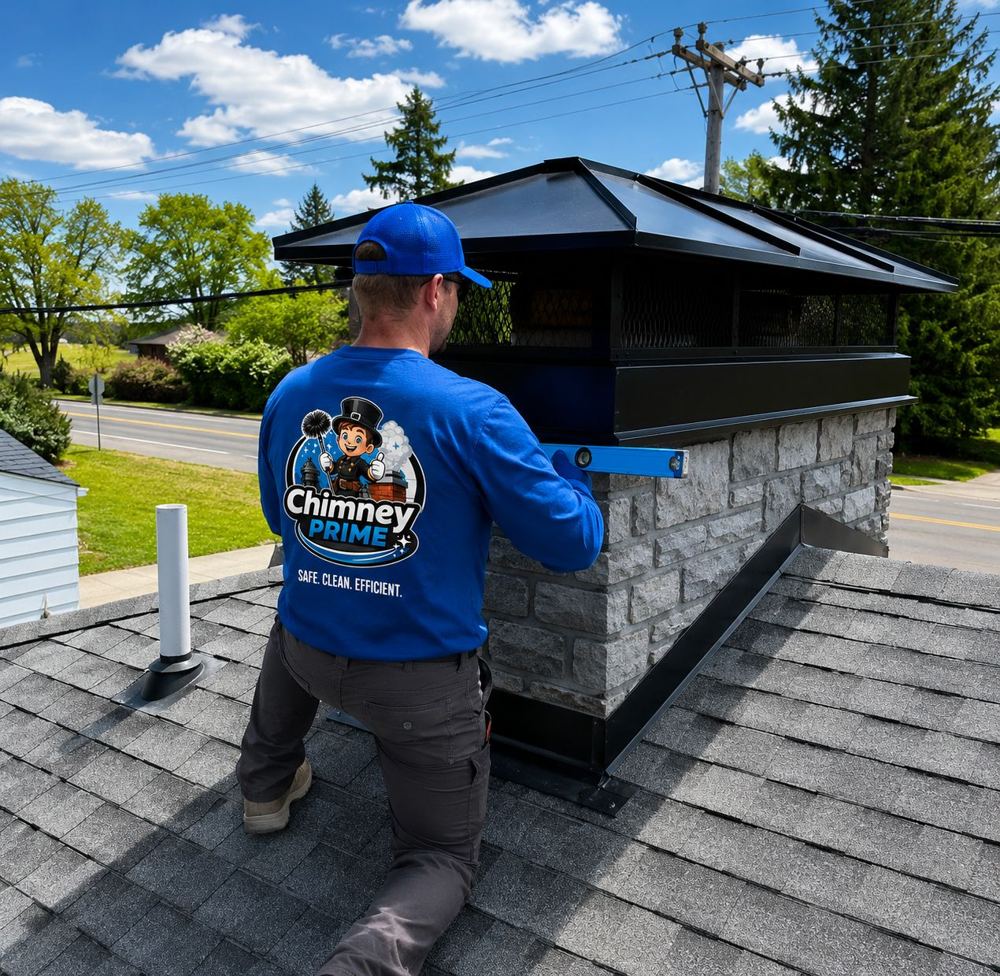
A Chimney Prime technician at work in the Jacksonville area
Chimney cleaning is primarily about maintaining proper airflow and removing combustible or obstructive material from the system.
Regular maintenance can help:
Remove soot and creosote
Reduce combustible buildup
Improve chimney airflow
Identify potential obstructions
Reduce unpleasant chimney odors
Keep the fireplace and chimney easier to inspect
Identify visible deterioration before it becomes more extensive
Animals, leaves, nesting material, and other debris can also enter some chimneys, particularly when a chimney cap is missing or damaged.
What Does Chimney Cleaning Include?
The exact scope varies by company and chimney type, but a professional chimney cleaning commonly includes sweeping accessible areas of the chimney or flue and removing loose soot, creosote, and debris.
A service may include:
Preparing and protecting the work area
Examining accessible fireplace and chimney components
Sweeping the chimney or flue
Removing loosened debris
Cleaning accessible fireplace areas
Checking the damper
Looking for obvious signs of damage or obstruction
Cleaning the immediate work area
Chimney cleaning and a detailed chimney inspection are not always the same service, so homeowners should ask exactly what is included when scheduling.
How Long Does Chimney Cleaning Take?
Many straightforward chimney cleanings can be completed in approximately 45 minutes to 90 minutes, although there is no universal time.
A service may take longer when there is heavy creosote buildup, a tall or complicated chimney, multiple fireplaces, difficult roof access, a wood stove or unusual appliance, an obstruction, animal nesting material, or additional inspection work.
The condition of the chimney is usually more important than the size of the house when estimating service time.
Does Chimney Cleaning Make a Mess?
Professional chimney cleaning should be performed with procedures designed to contain soot and debris.
Technicians may use protective coverings, specialized chimney vacuums, brushes, and controlled sweeping methods to prevent soot from spreading throughout the home.
Some dust is always possible when working with a dirty chimney system, but professional cleaning should not leave your living room covered in soot.
Homeowners can make the process easier by moving fragile decorations and personal belongings away from the immediate fireplace area before the appointment.
Does Chimney Cleaning Get Rid of Smell?
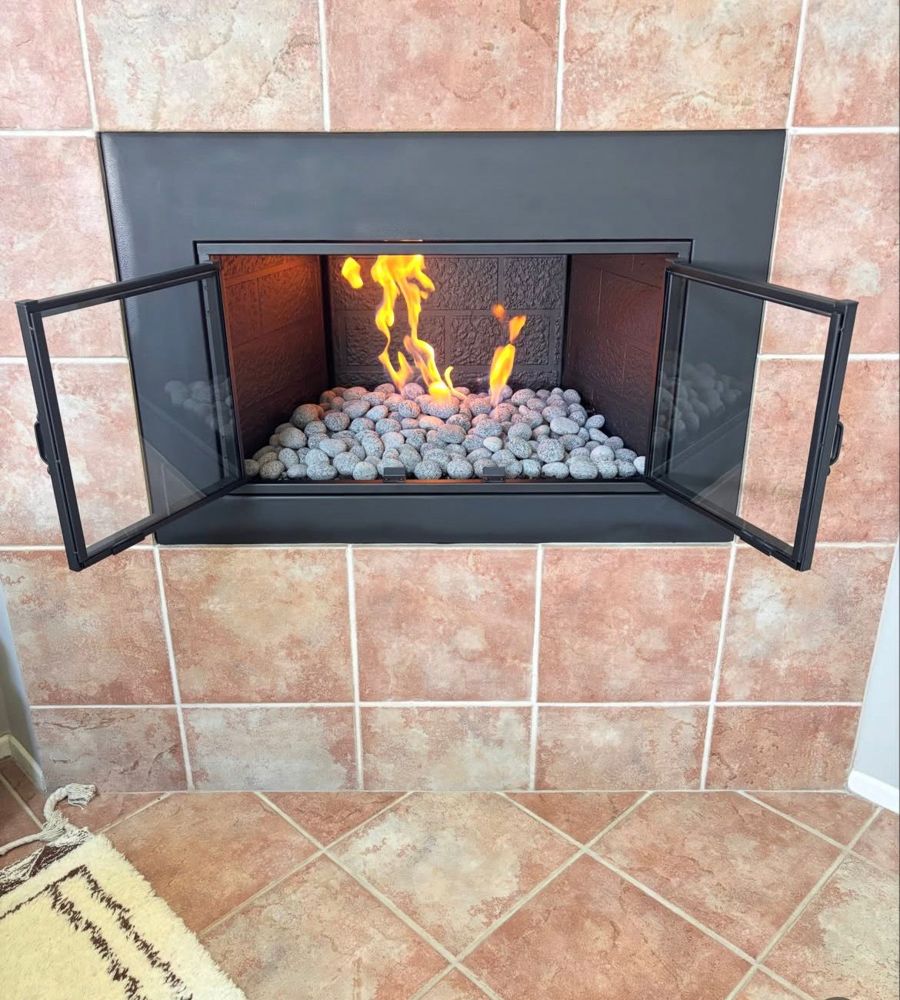
Fireplace cleaning restores glass, media and firebox
It can help, particularly when the odor is associated with soot or creosote buildup. However, cleaning does not solve every chimney odor problem.
Persistent smells can also be related to moisture entering the chimney, missing or damaged chimney caps, animal activity, mold or organic material, negative air pressure inside the house, water leaks, damaged masonry, or heavy creosote deposits.
If an odor remains after cleaning, the underlying cause may require additional investigation.
How Much Does Chimney Cleaning Cost?
There is no single price for every chimney.
The cost of professional chimney cleaning varies depending on the chimney system, location, accessibility, buildup, and whether additional inspection or repair services are required.
Factors affecting chimney cleaning cost can include chimney height, roof access, type of fireplace, wood stove configuration, amount of creosote, number of flues, obstructions, inspection requirements, and condition of the system.
The best way to determine the actual price is to contact a local chimney professional and describe the fireplace and chimney system.
Are Chimney Inspections Free?
Sometimes, but not always.
Some companies may provide a basic evaluation with a cleaning appointment, while others charge separately for chimney inspections. More detailed inspections generally involve additional work and may carry a separate fee. Always ask what is included before scheduling.
Can I Clean My Chimney Myself?
Technically, some homeowners attempt DIY chimney cleaning using chimney brushes and rods. However, chimney sweeping can involve several risks.
These include working on a roof, falling from ladders, breathing soot and fine particles, using an incorrectly sized brush, failing to remove all creosote, missing hidden damage, damaging a chimney liner, and failing to identify an obstruction.
Cleaning also does not automatically mean the chimney is in good condition. A chimney can appear clean while still having problems involving masonry, flashing, liners, caps, crowns, dampers, or other components.
For these reasons, many homeowners prefer professional chimney service.
Do Chimney Cleaning Logs Work?
This is one of the most common questions homeowners ask.
Chimney cleaning logs—sometimes called creosote sweeping logs—are designed to produce chemicals during burning that can affect some forms of creosote and make certain deposits easier to remove.
However, a chimney cleaning log is not the same thing as mechanically sweeping and inspecting a chimney.
A log cannot reliably physically brush the entire flue, remove every type of deposit, remove animal nests, remove leaves or physical obstructions, inspect a chimney liner, identify cracks, repair masonry, diagnose water intrusion, or replace a damaged chimney cap.
Think of chimney cleaning logs as a potential supplemental maintenance product rather than a replacement for professional chimney sweeping and inspection.
Are Chimney Cleaning Logs Safe?
They should only be used according to the manufacturer's directions and in an appliance for which the product is intended.
A chimney with suspected heavy buildup, blockage, structural damage, or other serious problems should be evaluated rather than relying on a cleaning log. Never assume that burning a chimney-cleaning product makes a chimney automatically safe to use.
Is Chimney Cleaning Dangerous?
It can be, particularly for inexperienced homeowners. Potential hazards include roof falls, ladder accidents, soot exposure, fine-particle inhalation, contact with creosote, sharp or damaged chimney components, and improper equipment use.
Professional chimney technicians use appropriate equipment and procedures to reduce these risks.
Can Chimney Sweeps Work in the Rain?
Light weather conditions may not prevent every type of chimney service, particularly work performed primarily from inside the home. However, roof work during rain can become unsafe because surfaces may be slippery.
Heavy rain, lightning, strong winds, and other hazardous weather conditions can require outdoor portions of an appointment to be rescheduled. Safety should always come first.
Who Cleans Chimneys?
A professional who cleans and services chimneys is commonly known as a chimney sweep or chimney technician. Modern chimney companies may provide much more than traditional sweeping.
Services can include chimney cleaning, chimney inspections, chimney repairs, chimney cap replacement, chimney crown repair, flashing repair, leak troubleshooting, chimney liner services, fireplace repair, masonry repair, and chimney installation.
Who Cleans Chimneys in My Area?
When searching for chimney cleaning near me, look beyond the first advertisement you see. Consider services offered, experience with your chimney type, clear communication, customer reviews, whether inspection is available, whether the company also handles repairs, and service-area coverage.
If you are in Jacksonville, Florida or a surrounding community, Chimney Prime provides chimney and fireplace services throughout the Jacksonville area.
Is Chimney Cleaning Necessary?
For chimneys that vent fireplaces or fuel-burning appliances, inspection and cleaning when needed are important parts of responsible maintenance. How frequently cleaning is required depends on use and chimney condition. A fireplace used heavily throughout the season may require more attention than one used only occasionally.
Frequently Asked Chimney Cleaning Questions
Do chimney cleaning fire logs work?
They may help alter certain creosote deposits, but they should not be considered a complete replacement for mechanical chimney cleaning or inspection.
How often should I clean my chimney?
There is no single schedule appropriate for every chimney. Inspection frequency, fireplace usage, fuel type, and the amount of buildup all matter.
Can I sweep my own chimney?
Some homeowners do, but chimney cleaning involves roof, dust, equipment, and inspection risks. Professional service is often preferable when you are unsure of the chimney's condition.
Does chimney cleaning remove odors?
It may reduce odors caused by soot or creosote. Persistent odors can indicate moisture, animals, airflow problems, or other issues.
Can a chimney be cleaned from inside?
Yes. Depending on the chimney design, professional cleaning may be performed from inside, outside, or both.
Is chimney cleaning messy?
Professional equipment and containment methods are designed to keep soot and debris from spreading throughout the home.
Is an inspection included with chimney cleaning?
It depends on the company and service package. Ask what level of inspection is included before scheduling.
Chimney Cleaning, Inspection & Repair in Jacksonville, FL
If you are looking for chimney cleaning in Jacksonville, FL, Chimney Prime provides professional chimney and fireplace services for homeowners throughout Jacksonville and surrounding communities.
Whether you need routine chimney cleaning, an inspection, fireplace service, or chimney repair, contact Chimney Prime at 904-990-9520 to discuss your chimney and schedule service.
 ChimneyPrime